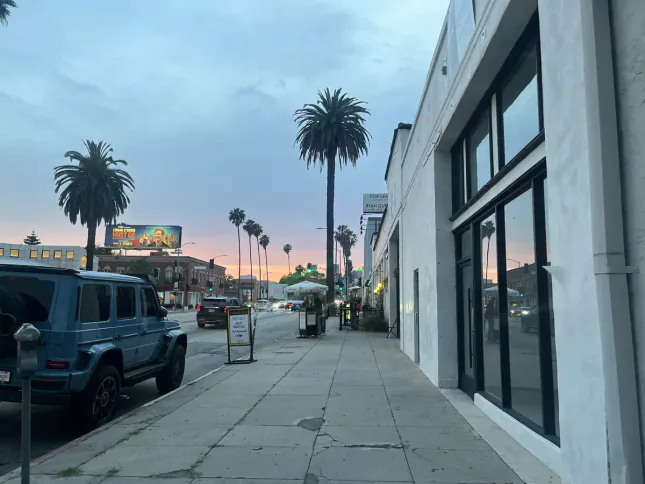
Sunset Coastal City Walk: A Slow Evening Travel Journal

There is a very specific kind of travel day that I have come to treat as non-negotiable: you do nothing impressive all afternoon, you eat something slightly too salty, and then you walk toward the sea just as the sky starts showing off. No entry ticket. No reservation. No queue where a stranger asks if you are in line while you are, in fact, in line.
A sunset coastal city walk is the least ambitious activity in travel and somehow the one people describe most vividly six months later. Nobody comes home saying “the museum audio guide changed me.” They say “there was this moment where the buildings turned pink.” So let’s talk about how to build that moment on purpose, without turning it into a project plan.
Why the Light Hits Different by the Water
Inland sunsets are lovely, but a city has a habit of eating them. Buildings block the horizon, and by the time you find a gap, the good part is over. On the coast, the sea works like an enormous open window: there is nothing between you and the light except air and possibly a container ship going about its evening.
Water also doubles the show. The sky does one version, the surface does a wobbly cover version, and glass towers behind you do a third. For a stretch that can feel like anywhere from a few minutes to most of half an hour, depending on season and latitude, an ordinary waterfront turns into something you’d describe with embarrassing adjectives.
Then it all goes blue and the streetlights take over, which is arguably the second-best part of the whole evening. How long that blue window lasts also varies with the time of year and how clear the air is, so treat it as a mood rather than a fixed slot on a schedule.
There’s a temperature thing too. Coastal air in the early evening often carries a bit of breeze that inland streets don’t get, which is why a seaside path in late summer can feel like a mild reward rather than a punishment. Your mileage varies with humidity, wind, and how stubbornly you refused to bring a light layer.
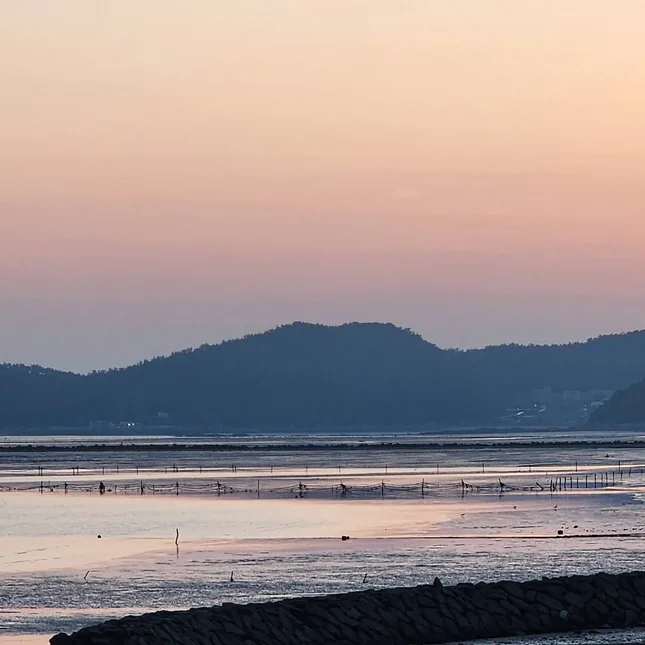
Timing Your Sunset Coastal City Walk Without Sprinting
The classic rookie error is arriving exactly at sunset, out of breath, phone at low battery, just in time to watch the last sliver disappear behind a crane. A better approach is to treat sunset as the middle of your walk, not the finish line.
The rough shape of a good evening
- Roughly an hour before: arrive, wander, decide where you actually want to stand. Scout two spots so you have a backup if a tour group claims the good railing.
- The golden stretch: stop moving. Sit on a step, lean on a rail, let the light do the work. This is not the time to check the map.
- The blue window after: keep walking. City lights switch on, the sky deepens toward indigo, and crowds thin out. Many people leave right here, which I think is a missed opportunity.
A quick practical note: sunset times shift a lot across the year, so it helps to check a weather or sunset time app the morning of, rather than guessing. Cloud cover is not automatically bad news either — a sky with some texture often looks better than a perfectly clear one, because clouds are what catch the color.
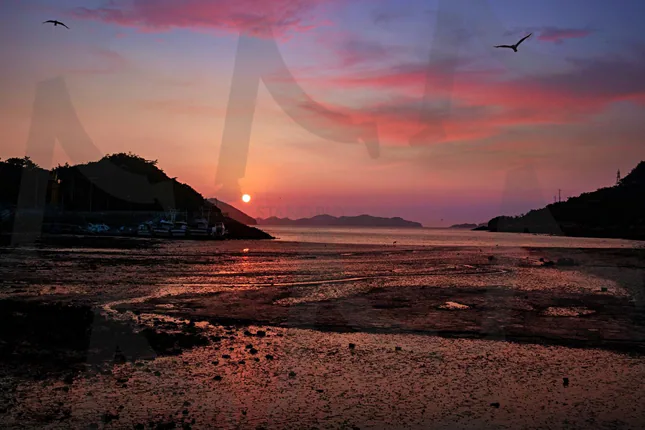
How to Read a Coastal Skyline Like a Local
Once you start paying attention, a waterfront skyline reads like a diagram of what the city does for a living. It’s a nice, low-effort game to play while you walk.
Bridges are usually the anchor of the composition. Long coastal bridges give you a horizontal line to hang the sunset on, and where they’re lit after dark, they can become the brightest thing in your photo. If a city has a well-known bridge over the water, you can usually build an entire evening around walking toward it and then away from it.
Cranes and cargo tell you it’s a working port, not just a scenic one. Some travelers find industrial silhouettes unromantic. I’d argue the opposite: gantry cranes against an orange sky can look almost like sleeping animals, and a slow-moving ship gives the frame a sense of scale that empty water never does.
Apartment towers are the underrated stars. When the sun drops, windows come on at slightly different times, and you get a pixelated glow that reads, to me at least, like dinner being made behind a few hundred curtains. It’s oddly comforting when you’re far from home.
The gap in the middle matters most. Look for where the skyline breaks — a river mouth, a harbor entrance, a beach curve. Those gaps are where the light pours through, and they’re often where the better walking paths were built, because planners like a view too.
Three Moods of a Korean Waterfront Evening
Korea is generous with coastline, and the evening mood can shift a lot depending on which stretch of it you’re standing on. Rather than ranking places, it may be more useful to think in moods and then pick the city that matches yours — these are personal impressions, not a strict guide to any single spot, and it’s worth confirming access and opening details locally.
The big-city beach mood
Think wide sand, tall towers directly behind it, cafés stacked several floors high, and a soundtrack of people meeting up. Busan is a common reference point here, and part of the appeal is that the city rarely steps back from the water — you get skyline and shoreline in the same glance. Good for travelers who want the walk to end somewhere lively.
The bridge-and-bay mood
Flatter, wider, more sky. Around Incheon, the sea can read as a broad open plane with long bridge structures on the horizon, which can give the sunset an almost cinematic sense of distance. It’s a calmer, emptier feeling, and it suits people who like their evenings a bit contemplative and their photos a bit minimal.
The harbor-town mood
Smaller scale, closer buildings, water woven through the streets. Yeosu is often described in these terms — a harbor city where the lights sit low and near, so the whole place can feel like it’s leaning over the water with you. Best if you want your walk to include narrow lanes and the smell of grilled things.
None of these need a strict itinerary. A useful rule of thumb: pick one continuous path along the water, walk it in one direction only, and let a coffee shop or a bus stop be your ending.
What Actually Belongs in Your Pocket
Evening seaside walks tend to require far less gear than the internet suggests, but a few things can save the mood.
- A light layer. Sea breeze after sunset can feel noticeably cooler than the same street in the afternoon. This is a common regret.
- A power bank. Golden hour is when your camera roll tends to fill up fast. Battery anxiety can ruin the quiet part afterward.
- Shoes you’ve already broken in. Boardwalks look flat and then quietly become stairs, ramps, and a hill you did not agree to.
- A transit card and a rough plan home. Coastal paths can end somewhere beautiful but light on nearby bus or subway options, so it’s worth checking ahead.
- One earbud, not two. Music improves the walk; hearing bikes, scooters, and people improves your evening more.
After the Light Goes: Etiquette, Safety, and Common Sense
Waterfront paths at night are generally sociable places — couples, joggers, families, people walking small dogs wearing better outfits than mine. Still, a few habits are worth keeping.
Stay on marked paths and behind railings, especially on rocks, breakwaters, and anything with waves hitting it. Wet stone in low light is a bad combination, and swell can look larger up close than it did from a distance. If a section is closed or fenced off, assume there’s a reason and take the long way around.
Watch for shared-use lanes. Many seaside promenades mix pedestrians with bicycles and scooters, and after dark you may hear them before you see them. Walking two-abreast on a narrow stretch can cause friction, so it’s kinder to fall into single file when something is coming.
Be considerate with photos. Long-exposure setups take space, and other people are also trying to enjoy a railing. If you’re using a tripod, tuck into a corner rather than the middle of the walkway. If you want strangers in the frame, keep them as distant, unidentifiable shapes against the sky, and ask first if anyone would end up recognizable up close.
The Post-Sunset Ritual (a.k.a. Snacks)
Here is my honest position: the walk exists to justify what happens after it. Once the sky has finished, the natural next step is to find something warm, sit somewhere with a view of the lights you just watched switch on, and stop talking for a minute.
Coastal cities tend to be well supplied for this. Convenience stores near beaches sometimes have outdoor seating you can use for the cost of a drink, which can feel like a small budget win — a cold drink, a plastic chair, and a skyline. Cafés on upper floors usually trade a higher price for a better angle, and street food alleys near harbors add the smell of the evening as a bonus.
Any of those works. The one choice I’d avoid is walking straight back to the hotel and scrolling, because that turns a good evening into a photo folder you won’t open. If you want to stretch the night, consider reversing your route: the same path walked in the other direction, fully lit, can feel like a different place, and you’ll notice things you missed while the sky was distracting you.
Reading the Weather Before You Commit
A short check before you head out can change the whole evening, and it takes about as long as tying your shoes. What I look at, in rough order of usefulness:
- Cloud height. High, scattered cloud tends to light up well. A low, uniform grey lid usually doesn’t, though it can still make a moody blue-hour walk.
- Wind direction. An onshore breeze can feel refreshing or relentless depending on the season, and it decides whether you’ll want that extra layer.
- Visibility or haze. Heavy haze softens a distant skyline into a suggestion. Sometimes that’s beautiful; sometimes it hides the bridge you came for.
- Tide, if the path is close to the water. Some shoreline walkways and tidal flats look completely different at high and low water, so a tide table is worth a glance.
None of this needs to be precise. If two of the four look promising, go. If the forecast turns out wrong, you’ve still had a walk by the sea, which is a low bar to clear and a pleasant one to fail at.
Journal Prompts for People Who Say They Don’t Journal
You don’t need a leather notebook and a fountain pen. Three lines in your phone’s notes app, written on the bench before you leave, will likely outlast most of your photos.
- What was the loudest sound, and what was the quietest?
- What color did the buildings turn, in your own words, without using “golden”?
- Who else was there, and what were they doing?
- One thing you’d do differently on the next evening walk.
That last one compounds over time. My own notes have slowly taught me that I prefer arriving early over hunting for the perfect viewpoint, that I always underestimate wind, and that I have rarely regretted lingering a while after the sun disappeared.
Slow travel gets described as a philosophy, which makes it sound like homework. In practice it can be as simple as this: choose water, choose evening, choose one direction, and let the city light itself up while you’re still standing there. The best sunset coastal city walk is rarely the most famous one — it’s usually the one where you weren’t in a hurry.

답글 남기기